
The SF in Translation Website After Ten Years
I’ve written many times (see here and here, for instance) about why I started the SF in Translation (SFT) website in May 2016. I saw a gap in a field and decided to fill it with a website that would give readers useful information about the growing number of works of translated speculative fiction available to them. A devotee of speculative fiction and international literature, I was thrilled to be able to put those two things together and gather around me those who loved them, too.
The SFT website is just the latest effort to introduce Anglophone readers to speculative fiction from around the world, one that began in 1970s with the first International Symposium on Science Fiction in 1970—organized by Japan—and then the founding of the international association World SF at the First World Science Fiction Writers’ Conference in Dublin by Brian Aldiss, Harry Harrison, and Frederik Pohl. Though World SF only lasted into the early 90s, its legacy has continued, with Lavie Tidhar’s World SF Blog running from 2009-2013, Cheryl Morgan’s Science Fiction and Fantasy Translation Awards (2009-2014), Tidhar’s multiple SFT anthologies, and my own SFT website. In 2021, I published Out of This World: Speculative Fiction in Translation from the Cold War to the New Millennium with the University of Illinois Press, and my follow-up book (which includes many more source languages!) is forthcoming from the University of Wales Press.
Much has happened, then, in the ten years since I started the SFT website. More translation-centered panels have happened at SFF conferences (including those I participated in or ran at WisCon in the 2010s), Locus and the British Science Fiction Awards have both launched translation categories, Dale Knickerbocker, Ian Campbell, and other scholars have published groundbreaking academic texts on SFT, and the number of works of SFT has risen, with 90 long-form texts published just in 2025.
On this website, I’ve tried to capture the wonderful diversity of SFT through yearly lists of forthcoming books, reviews, interviews, original SFT, lists lists lists, a gigantic spreadsheet, guest essays, and more. Spotlight series on countries and regions (Nordic, Polish, Romanian, Hebrew, Hungarian, Chinese, and Japanese) have allowed me to focus in on particular literatures and learn more about their SFT histories. A “To Be Translated” tab (which I must update) offers translators a mouth-watering group of texts that would be welcomed in English translation. And then there’s the always-updated “SFT source language lists” tab that offers the information on every work of SFT I can find that appears in the spreadsheet, but in bibliographical form.
Those of you who’ve been following my work on SFT over the past ten years know very well how much I love spreadsheets and charts, so of course I put together some lovely spreadsheets and charts to track trends in SFT since 2016. Some stats are unsurprising, but others are eye-opening. Let’s start with long-form.
Of the authors published in English translation over these ten years, Yoshiki Tanaka has the highest number of books, all because of the Legend of the Galactic Heroes series (10 books) published by the now-defunct Haikasoru and translated from the Japanese by Daniel Huddleston, Tyran Grillo, and Matt Treyvaud. After Tanaka come Andrzej Sapkowski (Polish) and Markus Heitz (German), both of whom had many of their high fantasy novels translated into English beginning in the late 2000s up until today. In third is Liu Cixin, whose The Three-Body Problem, translated from the Chinese by the masterful Ken Liu, kicked off years of Liu novels in English, each of which is an excellent example of the kind of hard science fiction that I, and many others, crave.
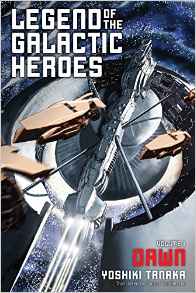
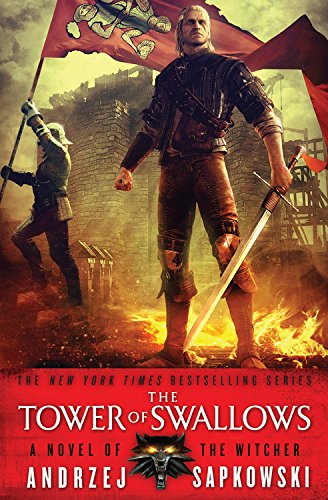
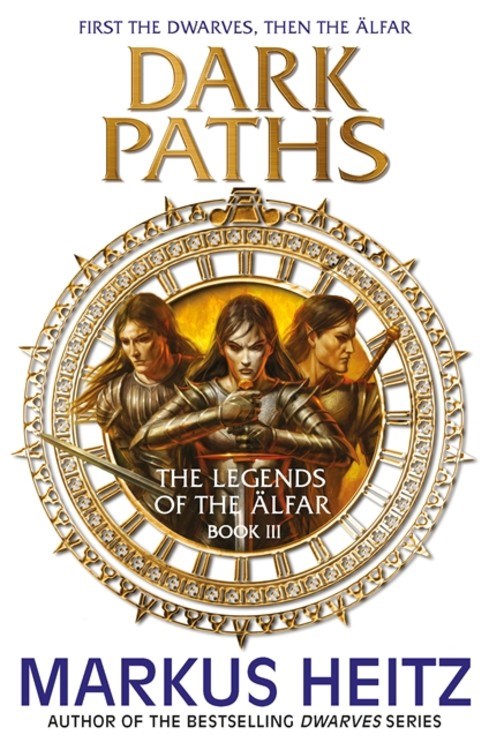

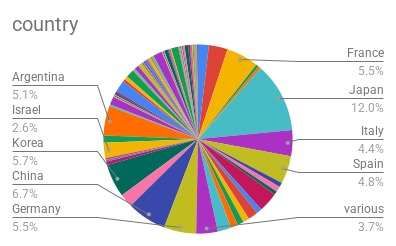
SFT from Asia has dominated these past ten years, with the top three countries supplying SFT being Japan, China, and Korea. From the first, we’ve gotten 78 novels, collections, and anthologies, which translates into 12% of all the long-form SFT since 2016. Forty-four works have come from China, while 37 have arrived from Korea. When we look at source languages, though, the region dominance shifts: here, we have 100 works translated from the Spanish, 81 from the Japanese, and 69 from the French.
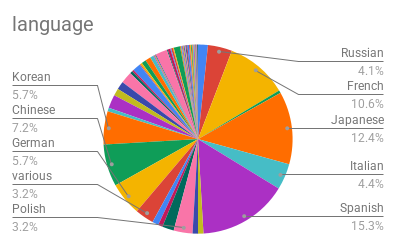
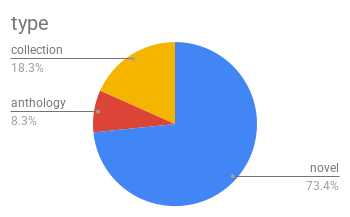
Did I mention that we received 652 works of long-form SFT over these past ten years? This may not seem like a lot in general publishing numbers, but for SFT, it is a lot. New Directions is responsible for the most SFT during this time, publishing 28 genre novels and collections in translation. Haikasoru, Open Letter, and Restless Books all brought us 16, with a large number of other publishers responsible for 5 or more texts. Unsurprisingly, 73.4% of the texts published have been novels, with 18.3% collections and 8.3% anthologies. And 2025 in particular, as I mentioned earlier, brought us a very large number of long-form texts, with 2018 coming in second (78 texts).
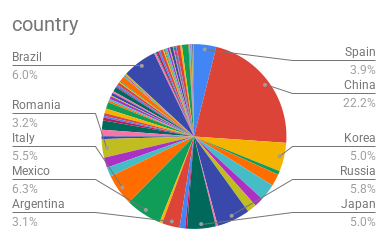
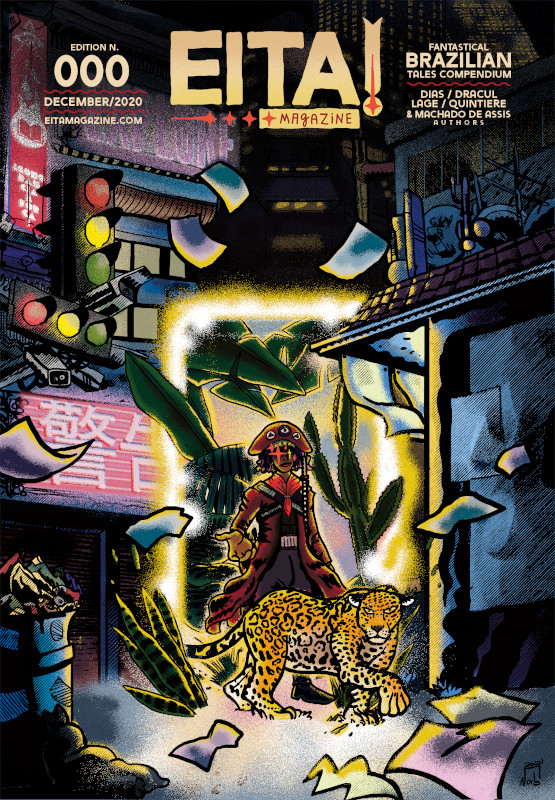
Turning to short-form SFT, I’ve counted 618 stories published in magazines (print and online), though I’m sure I’ve missed some. Here, we see that Russian author K. A. Teryna comes in first in terms of number of stories published in English, translated by Alex Shvartsman (12). Chinese author Chen Qiufan has 11, while Romanian author Gheorghe Săsărman and Brazilian author Hache Pueyo each have 8. The highest number of translated short fiction has come from China, understandable given Clarkesworld’s contract with a major science fiction magazine there for stories to translate. Mexico and Brazil come next with the former supplying 39 stories and the latter 37. Brazilian SFT was given a boost in the early 2020s with the short-lived but vibrant magazine Eita! Once again, as with long-form SFT, when we look at texts according to source language, the region shifts toward Europe. While we had 142 works of short Chinese SFT, we received 114 from the Spanish and 42 from the Russian.
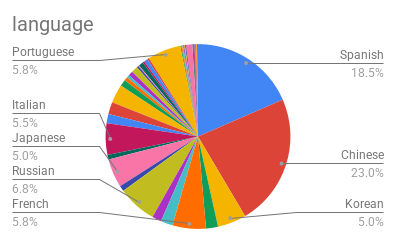
If we look at each year’s pie chart, we’ll notice an interesting trend: 2016 has the most stories from Chinese, with Spanish coming in second. In 2017, it flips. Then in 2018, it flips again. And again in 2019 and 2020. Chinese dominates 2021 through 2024, and then Spanish dominates again in 2025.
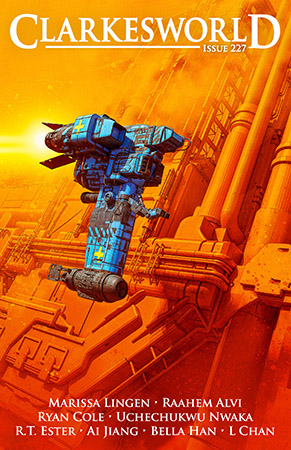
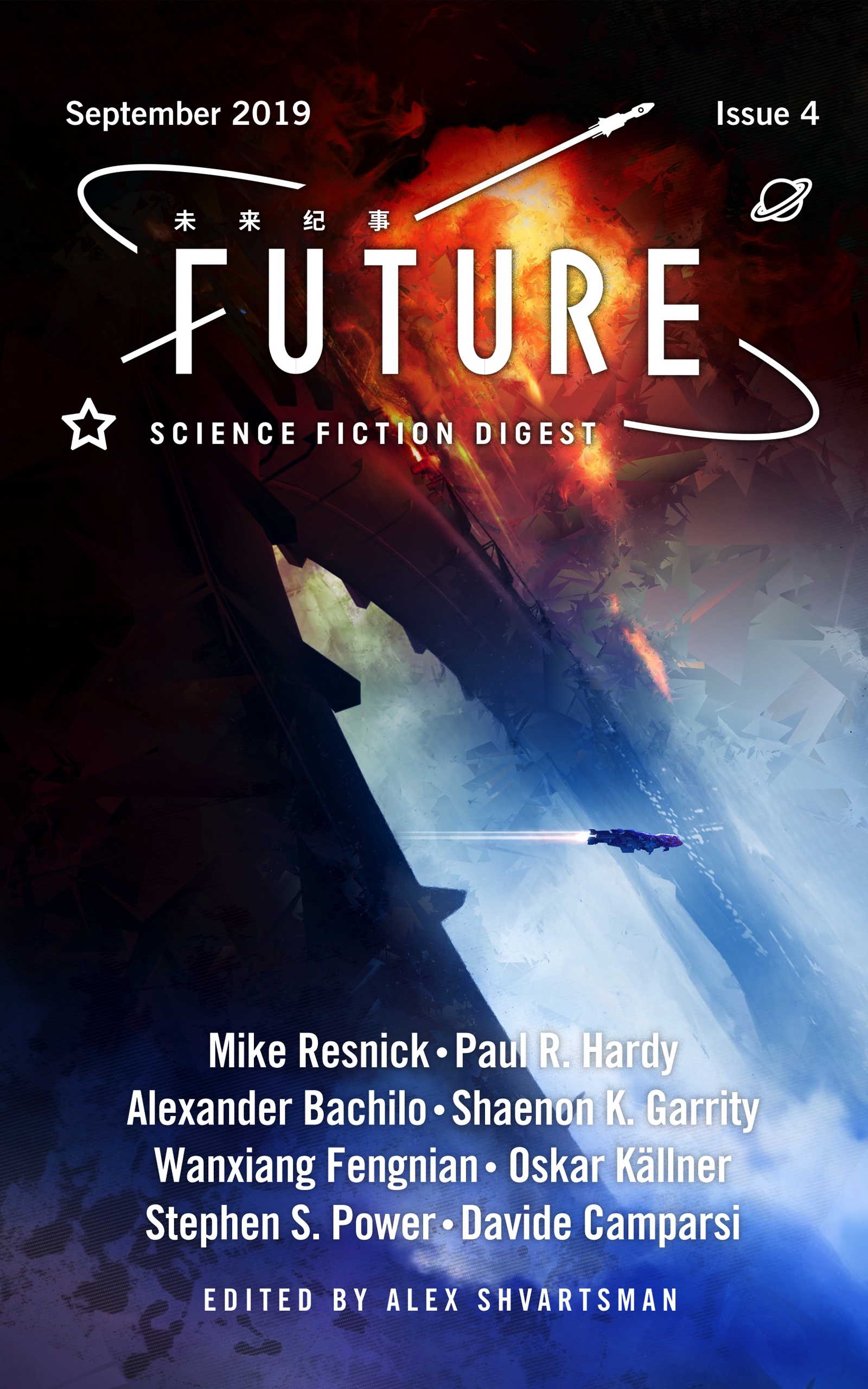
Looking at magazines, Clarkesworld published 108 works of short SFT, overwhelmingly from the Chinese and some from the Spanish. In second place here is Samovar, Strange Horizons’ sister magazine that focuses on SFT four times a year—they brought us 56 stories from the Pashto, Finnish, Spanish, Swedish, Greek, Arabic, Italian, Yiddish, Bengali, Chinese, Russian, Dutch, Portuguese, Korean, Czech, Japanese, Indonesian, Persian, Malay, Bulgarian, Lithuanian, Hungarian, and Urdu (just look at that list!). Future Science Fiction Digest (2018-2022) and Words Without Borders each brought us 38 stories, also from a wide variety of languages.
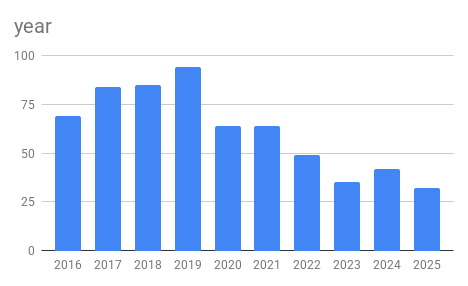
The best year for short-form SFT in this ten-year period was 2019, with 94 stories, followed by 2018 (85 stories) and 2017 (84 stories).
So that’s a lot of stats, and while I would love to dive into each of them, this essay would turn into a book (don’t worry, book #2 is coming!). Generally, we can see from all of these numbers that while SFT is small, it is mighty. The many different publishers and steady stream of stories, despite the financial and logistical hurdles of bringing texts into translation and then getting them published and in front of Anglophone readers’ eyeballs, suggests that SFT is still going strong into the 21st century.
It seems eminently appropriate that this year will also mark the birth of the first-ever SFT-focused magazine: Small Planet, out this May and available on the SFT website for free. I swear, the timing is totally coincidental. I just realized in March, after bandying the idea about in my brain for years, that the time for a magazine was now. May seemed like a good time for a first issue.
Keep reading SFT, read the website and the magazine, and tell your friends and family about these wonderful stories. Happy ten years!

2 comments on “Essay: The SFT Website: Ten Years!”