
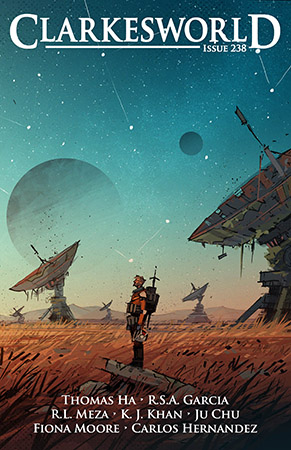
“The Animator and the Glazer” by Ju Chu, translated from the Chinese by S. Qiouyi Lu (Clarkesworld, July 1)
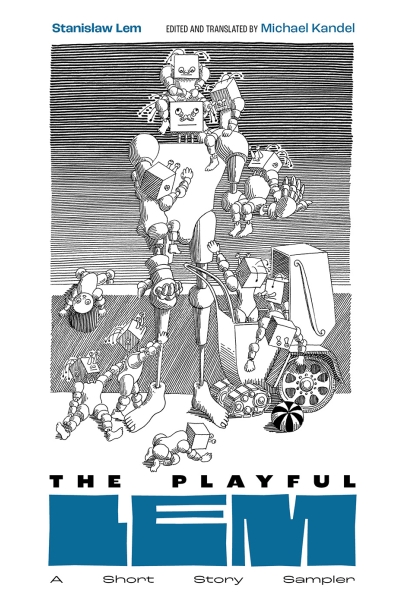
The Playful Lem: A Short Story Sampler by Stanislaw Lem, translated from the Polish by Michael Kandel (Modern Language Association of America, July 1)
Conjuring worlds in which robots are kings and Earthlings exist on the fringes of the universe, Stanisław Lem’s anachronistic fairy tales and science fiction parables envision knights who fight for the favor of a mechanical princess, a computer that can create anything (so long as it begins with the letter n), and a human astronaut who goes undercover on a planet ruled by robots. In celebrated translations by Michael Kandel, these stories highlight age-old human weaknesses—vanity, jealousy, cowardice, and cruelty—while tickling the reader with layered humor ranging from satire to wordplay to slapstick
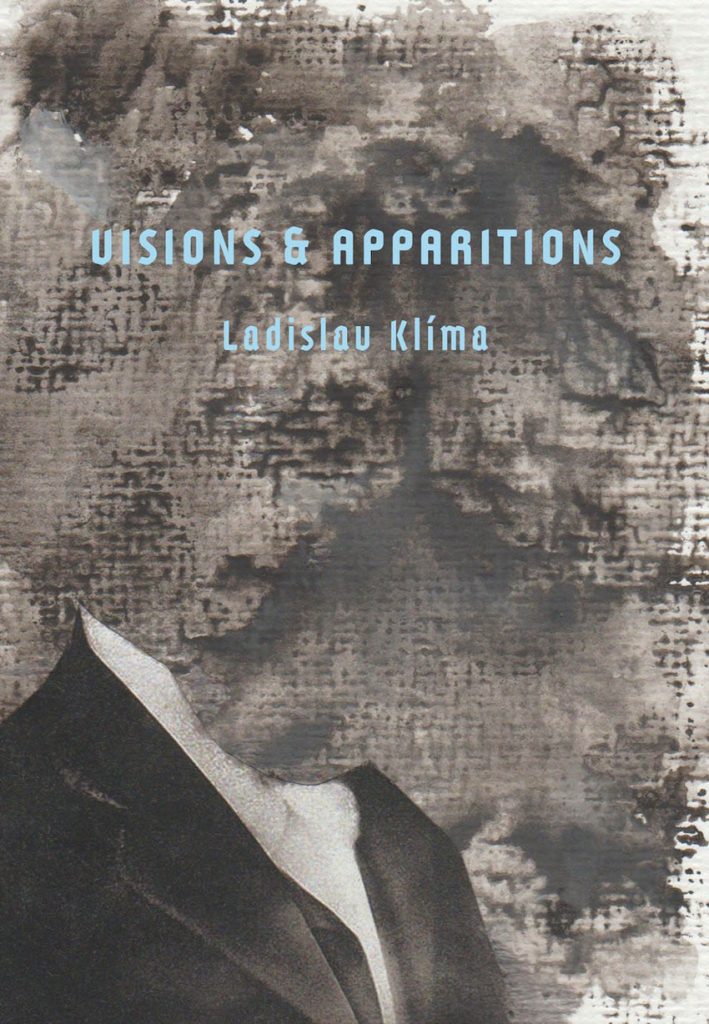
Visions & Apparitions: Selected Tales of the Uncanny by Ladislav Klíma, translated from the Czech by Jed Slast (Twisted Spoon Press, July 6)
Collected here for the first time in English, Visions & Apparitions represents the greater part of Klíma’s output of ghost stories. Klíma employed the horror genre as a way to explore his subjectivist philosophy, and by all accounts he enjoyed writing them to pass the time. At times playful and lyrical, if not outright comical, the stories were written at various stages, the last text, ostensibly a one-act play about the undead, penned (or dictated) in the final months of his life. Taken together, they reflect Klíma’s lifelong preoccupation with the nature of “reality” as a matrix of madness, hallucination, and dream permeated with all-to-real phantoms and ghouls. Akin to Poe, ghosts emerge from the unconscious or the power of imagination and materialize as more than mere figment, visible even to others.
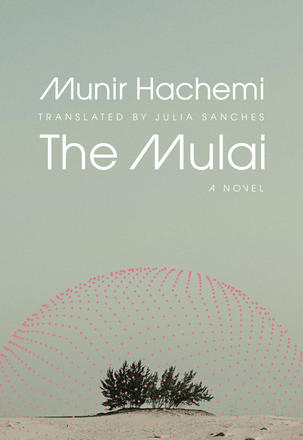
The Mulai by Munir Hachemi, translated from the Spanish by Julia Sanches (Coach House Books, July 14)
Interstellar via Invisible Cities: spec-fic translated from Spanish imagines life on another planet….Drawing on Borges, Le Guin, and Calvino, The Mulai is a mind-bending work of metafiction whose interlocking puzzles resound with Munir Hachemi’s singularly playful and eclectic style.

China + 100: Stories from a Century After the Outbreak, edited by Xueting C. Ni, various translators from the Chinese (Comma Press, July 23)
China + 100 poses a simple question to ten leading Chinese science fiction writers: what might China look like in the year 2119 – a century after the first outbreak of Covid-19. How might this event – which triggered a global health crisis, and altered the world’s relationship with China – impact the development and position of China a century later? Exploring everything from big tech, class warfare, transhumanism, government infringements on personal freedoms, and global security, these stories ask all the difficult questions: will China and the world have learned from the lessons of the Covid-19 pandemic, and be prepared for even greater health threats in the future, or will new, man-made dangers have emerged?
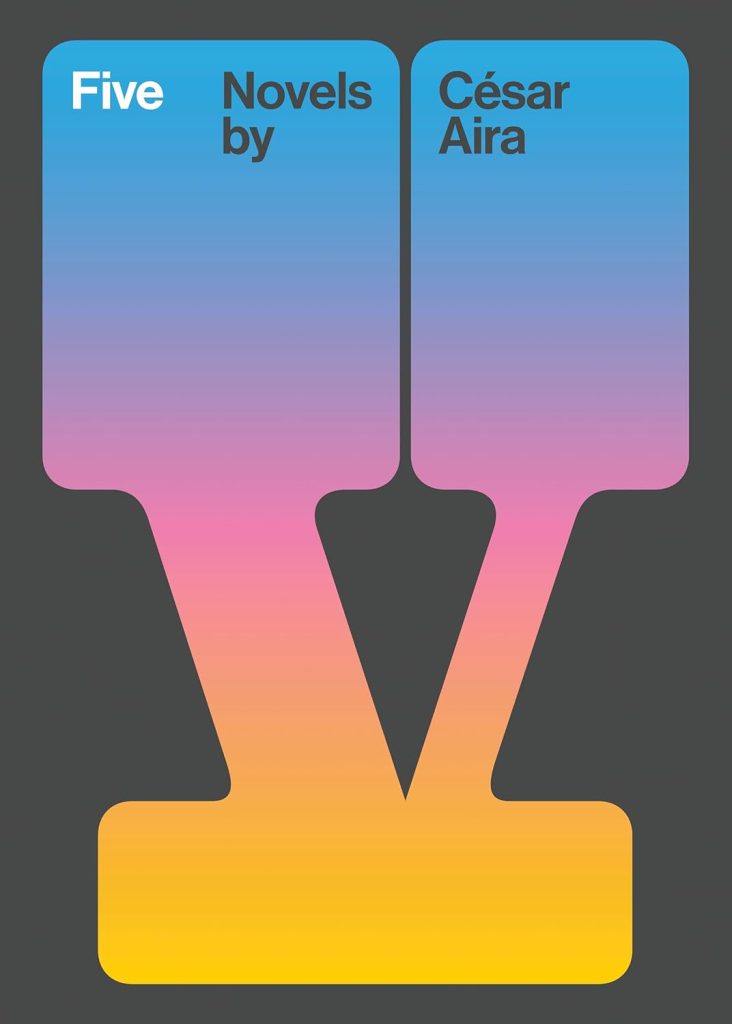
Five by César Aira, translated from Spanish (Argentina) by Chris Andrews (New Directions, July 28)
Five, selected from over 100 untranslated novels and stories by “the Duchamp of Latin America” (Natasha Wimmer), brings together—each an astonishing work—Margarita: A Memory, The Dream, Musical Brushstrokes, Princess Springtime, and The Hormone Pill. Following a cast of dreamlike characters including cyber nuns, a young princess forced to be a hack translator, a newspaper vendor, and General Winter and his sadistic sidekick, the Little Christmas Tree, Five shows the many facets of Aira’s multifarious mind as he turns expectations inside-out and gleefully explodes genre conventions.
REVIEWS
Strange Buildings – Locus
The Mulai – Strange Horizons
A Plagued Sea– Skiffy & Fanty
The Wax Child — Reactor
Midnight Timetable — Strange Horizons
No Edges: Swahili Stories – Reactor
The Playful Lem – ARB
