
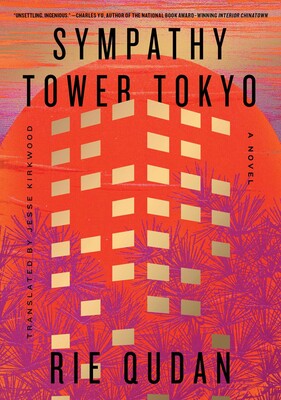
Sympathy Tower Tokyo by Rie Qudan, translated from the Japanese by Jesse Kirkwood (S&S/Summit Books, September 2)
Welcome to the Japan of tomorrow. Here, the practice of radical sympathy toward criminals has become normalized. The incarcerated are considered victims influenced by their environments to commit crime and are labeled accordingly as Homo miserabilis. A grand, yet controversial, skyscraper in the heart of Tokyo is planned to house lawbreakers in compassionate comfort—Sympathy Tower Tokyo. Acclaimed architect Sara Machina has been tasked with designing the city’s new centerpiece but is filled with doubt. Haunted by a terrible crime she experienced as a young girl, she wonders if she might inherently disagree with the values of the project, which should be the pinnacle of her career. As Sara grapples with these conflicting emotions, her relationship with her gorgeous—and much younger—boyfriend grows increasingly strained. In search of solace and in need of creative inspiration, Sara turns to the knowing words of an AI chatbot…
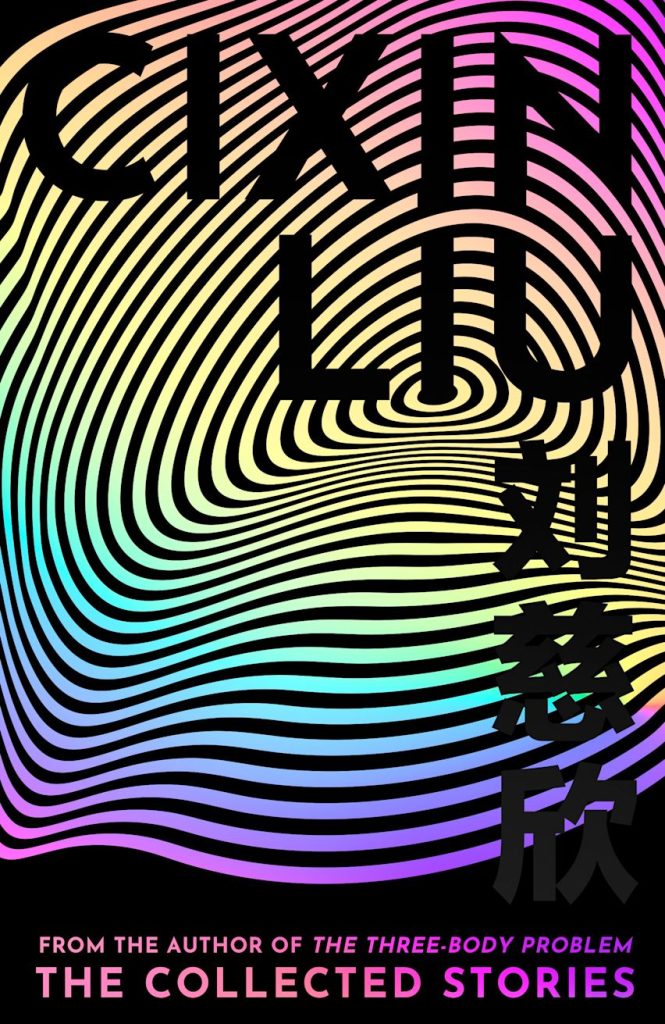
The Collected Stories by Cixin Liu, translated from the Chinese by various translators (Head of Zeus, September 11)
From cosmological horror to wry satire, from first contact to the end of everything, these 32 stories explore our place in the universe, pitting the vastness of space against the fragility of humanity. The scale of Liu’s imagination is immense, exploring both the infinite and the infinitesimal, the epic and the intimate. Here, machine intelligences create art or sow terror, humanity is annihilated or created anew, alien civilizations come bearing gifts, or they come in the cold logic of universal war. Solar systems are devoured, planets are turned into spaceships, and time is reversed.
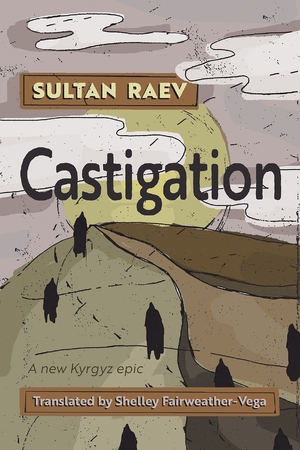
Castigation by Sultan Raev, translated from the Kyrgyz by Shelley Fairweather-Vega (Syracuse University Press, September 15)
Seven escaped mental patients—including reincarnations of Genghis Khan, Cleopatra, and Alexander the Great—trudge across a nameless landscape, pursued by an omnipresent snake and haunted by their past lives’ brutal transgressions. Led by a mysterious Emperor who promises deliverance to the Holy Land, these travelers are actually pilgrims of their own fractured histories, each confronting the violent, sensual, and deeply human moments that have defined their existence.
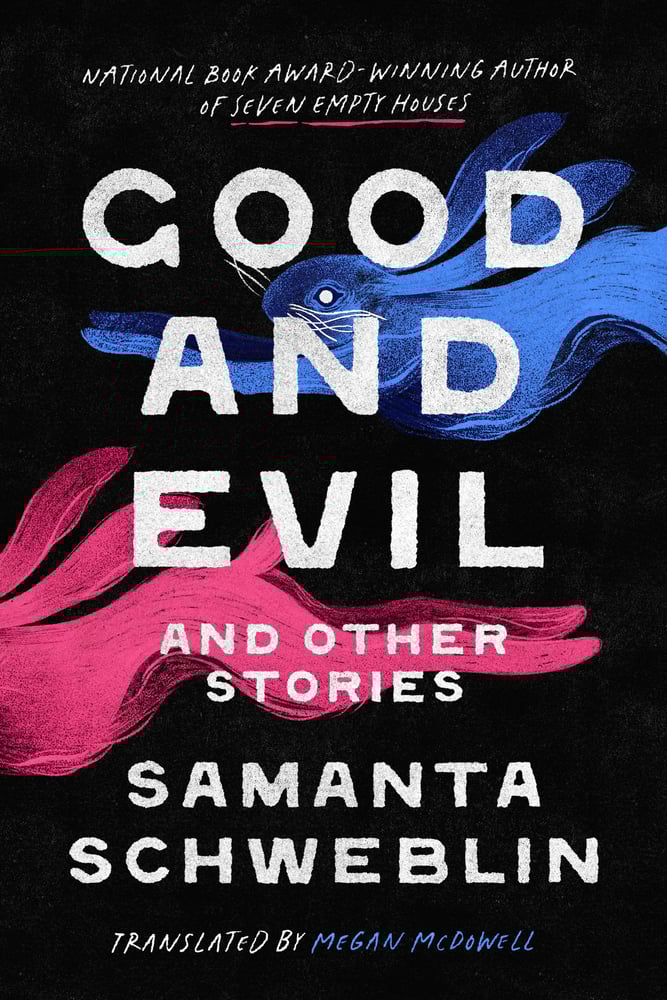
Good and Evil and Other Stories by Samanta Schweblin, translated from the Spanish by Megan McDowell (Knopf, September 16)
The characters of Good and Evil find themselves at a point of no return, dazzled by the glare of impending tragedy. Vulnerable and profoundly human, they become trapped in the instant in which the uncanny has lurched into their lives. Some are transformed, some are isolated, others waver between guilt or tenderness. All of them are riven by uncertainty. Schweblin’s prose uses tension and truth to construct a literary universe in which the monsters of everyday life come so close to us that we can almost feel their breath. Her writing provokes awe and disquiet, a state of alarm that at the same time transports us to a hypnotic world as recognizable as it is strange.
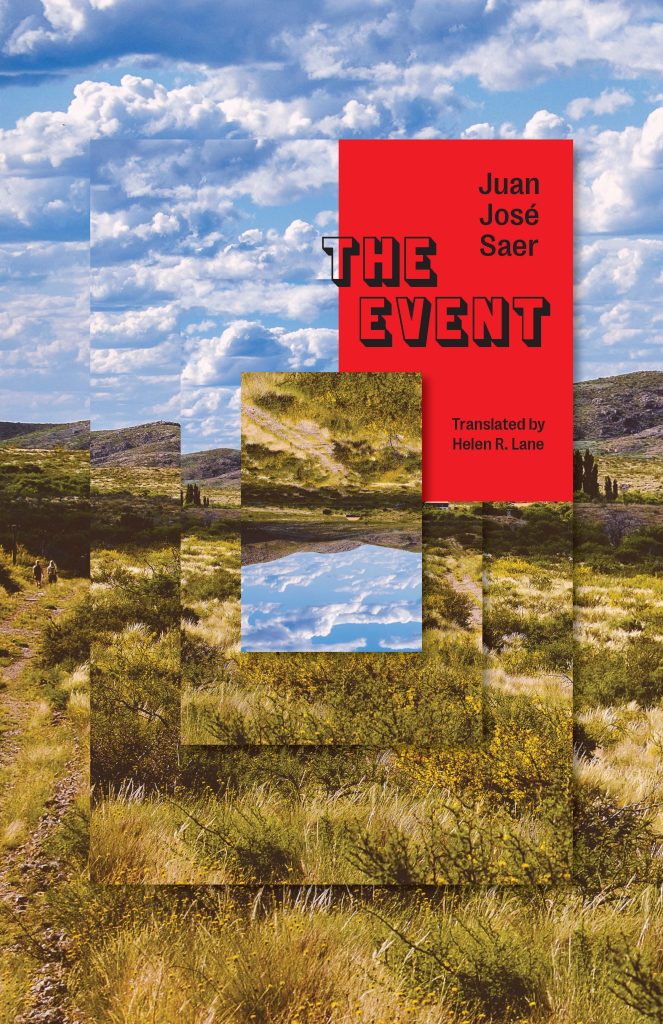
The Event by Juan José Saer, translated from the Spanish by Helen R. Lane (Open Letter, September 23)
Blanco the Magician is renowned across Europe for his astonishing telepathic feats, dazzling audiences with the power of his mind. But when a ruthless conspiracy exposes him as a fraud, his carefully constructed world shatters. Fleeing disgrace, Blanco escapes to the remote corners of Argentina, where he begins a new life in obscurity with the beguiling and enigmatic Gina. As Blanco struggles to rebuild his identity, he finds himself entangled in a series of events that blur the line between illusion and reality. In The Event, Juan José Saer weaves a hypnotic tale of deception, exile, and the search for meaning in a world where nothing is as it seems. With his signature philosophical depth and luminous prose, Saer explores themes of love, identity, and the fragile constructs that hold our lives together.
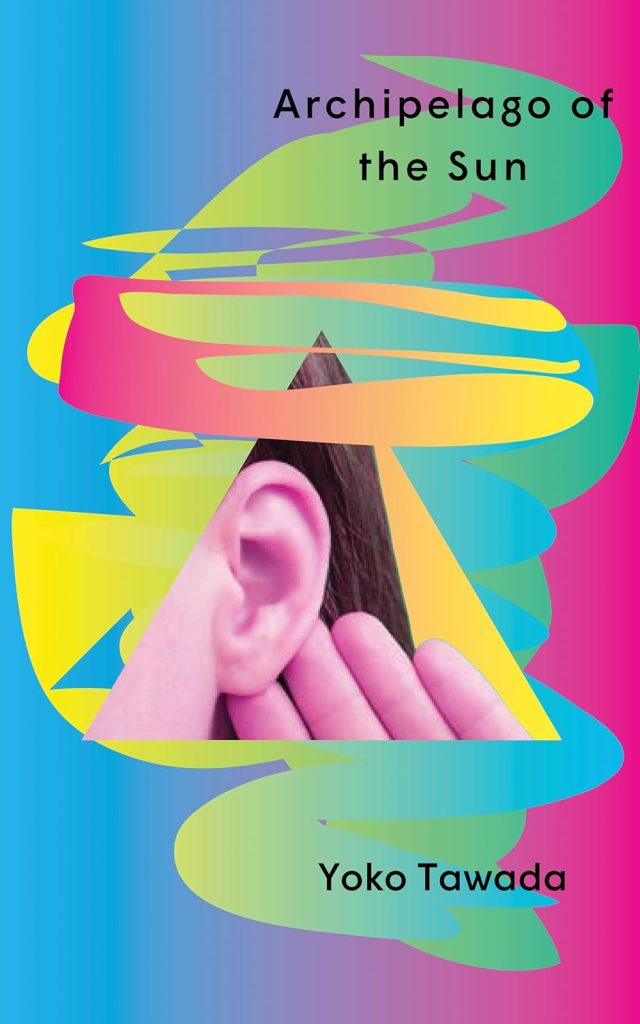
Archipelago of the Sun by Yoko Tawada, translated from Japanese by Margaret Mitsutani (New Directions, September 23)
Archipelago of the Sun finds Hiruko still searching for her lost country, traveling around the Baltic on a mail boat. With her are Knut, a Danish linguist; Akash, an Indian in the process of moving to the opposite sex; Nanook, a Greenlander who once worked as a sushi chef; Nora, the German woman who loves Nanook but is equally concerned with social justice and the environment; and Susanoo, a former sushi chef who believes he is responsible for the entire group. But weren’t they originally supposed to sail to Cape Town, and then on to India? Puzzled by this sudden change in route, which no one seems to remember anything about, they encounter long dead writers (Witold Gombrowicz, Hella Wuolijoki) on board, plus a cast of characters from literature, art, and myth. As the very existence of Hiruko and Susanoo’s homeland is called into question, Susanoo meets the mythical princess he will marry, and Hiruko tells the others that she will now be a house in which everyone can live. Though the trilogy comes to its end, their journey seems likely to continue.
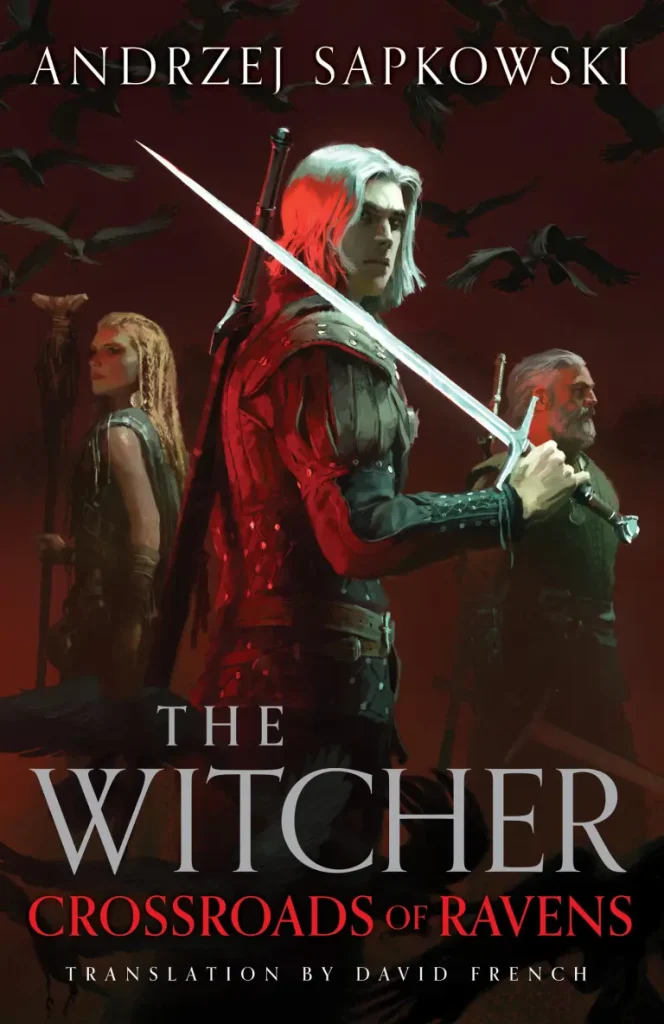
Crossroads of Ravens by Andrzej Sapkowski, translated from the Polish by David French (Gollancz, September 30)
Witchers are not born. They are made. Before he was the White Wolf or the Butcher of Blaviken, Geralt of Rivia was simply a fresh graduate of Kaer Morhen, stepping into a world that neither understands nor welcomes his kind. And when an act of naïve heroism goes gravely wrong, Geralt is only saved from the noose by Preston Holt, a grizzled witcher with a buried past and an agenda of his own. Under Holt’s guiding hand, Geralt begins to learn what it truly means to walk the Path – to protect a world that fears him, and to survive in it on his own terms. But as the line between right and wrong begins to blur, Geralt must decide to become the monster everyone expects, or something else entirely. This is the story of how legends are made – and what they cost.
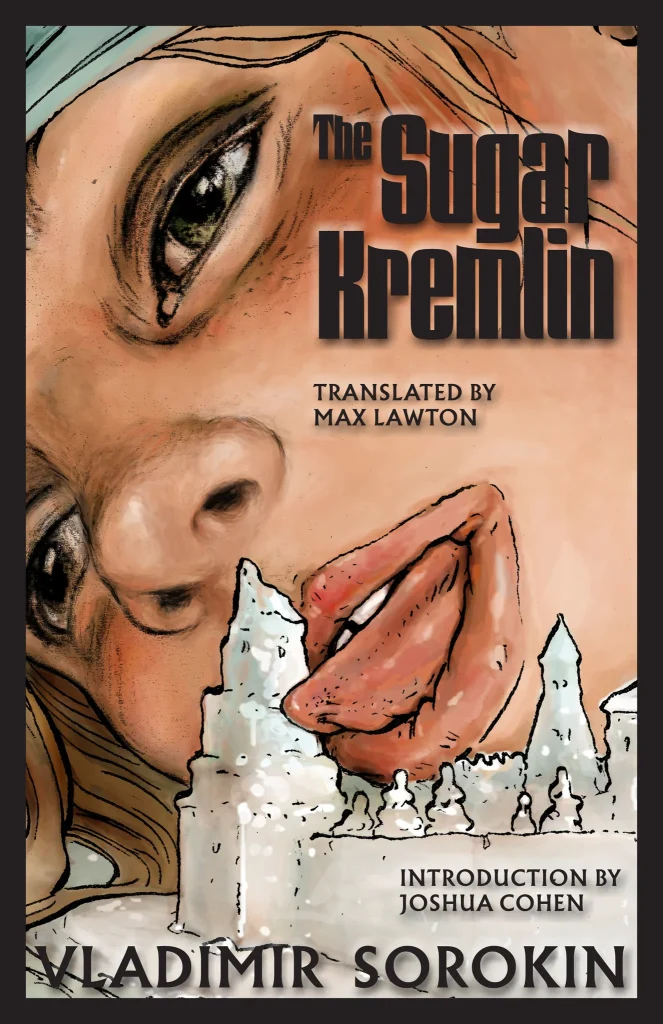
The Sugar Kremlin by Vladimir Sorokin, translated from the Russian by Max Lawton (Dalkey Archive Press, September 30)
Presenting a wide variety of genres and tones, The Sugar Kremlin lays out a frightening vision of speculative mercilessness and carnivalesque political horror. The Sugar Kremlin is the follow-up to Vladimir Sorokin’s Day of the Oprichnik, taking place in the same New Medieval universe over the course of fifteen chapters that all return to the object of the title: replicas of the Moscow Kremlin made of sugar. Thousands of these creations are given away to children during the holidays, then make their way through each stratum of Russian society. We follow the trajectories of these candied gifts from the hands of harried paupers to secret political dissidents, from torture-obsessed civil servants to sex workers in a nearby bordello… As Sorokin shifts from story to story and style to style, he draws the reader through grotesquely Russian scenes, creating an aberrantly metaphysical encyclopedia of the New Medieval “Russian soul.” The candy’s sweetness is deceptive—underneath it, you may detect notes of blood and excrement.
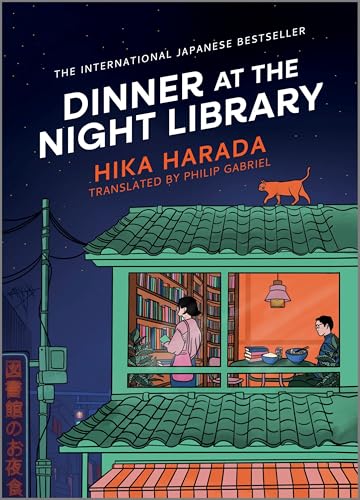
Dinner at the Night Library by Hika Harada, translated from the Japanese by Philip Gabriel (Hanover Square Press, September 30)
All Otaha Higuchi wants to do is work with books. However, the exhausting nature of her work at a chain bookstore, combined with her paltry salary and irritating manager quickly bring reality crashing down around her. She is on the verge of quitting when she receives a message from somebody anonymous, inviting her to apply for a job at ‘”The Night Library.” The hours are from seven o’clock to midnight. The library exclusively stores books by deceased authors, and none of them can be checked out – instead, they’re put on public display to be revered and celebrated by the library’s visitors, making it akin to a book museum. There, Otoha meets the other staff, a group of likeminded literary misfits, including a legendary chef who prepares incredible meals for the library’s employees at the end of each day. Night after night, she bonds with her colleagues over meals in the café, each of which are inspired by the literature on the shelves. But as strange occurrences start happening around the library that may bring the threat of its closure, Otaha and her friends fear that the peace they have found there will forever be lost to them. Will their faith in the value of books strong enough to save it? And what will remain if it isn’t?
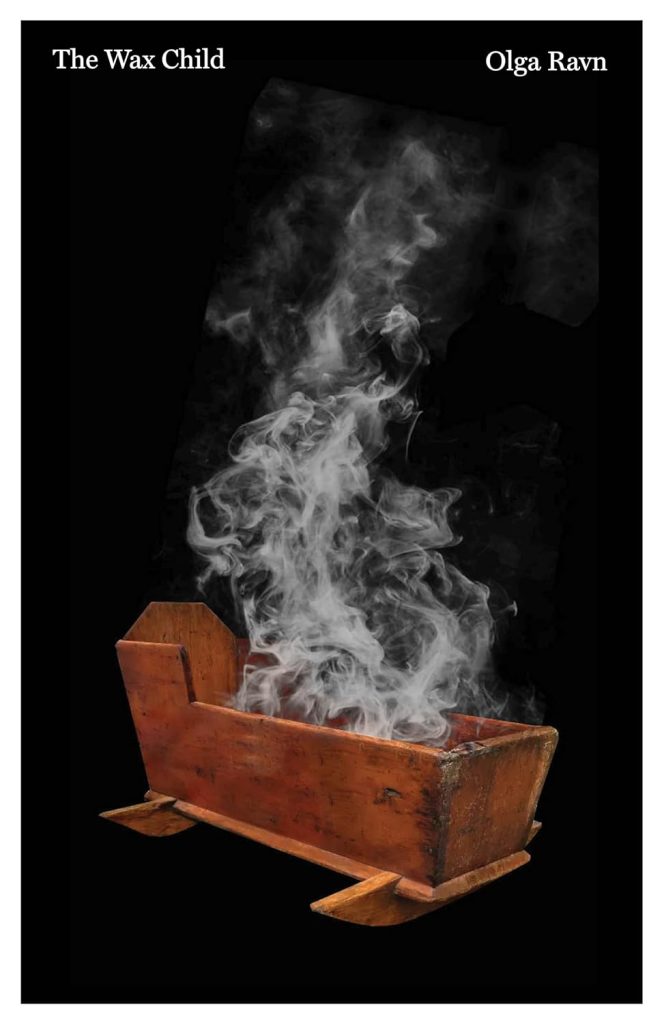
The Wax Child by Olga Ravn, translated from the Danish by Martin Aitken (New Directions, September 30)
In seventeenth-century Denmark, Christenze Kruckow, an unmarried noblewoman, is accused of witchcraft. She and several other women are rumored to be possessed by the Devil, who has come to them in the form of a tall headless man and gives them dark powers: they can steal people’s happiness, they have performed unchristian acts, and they can cause pestilence or even death. They are all in danger of the stake. The Wax Child, narrated by a wax doll created by Christenze Kruckow, is an unsettling horror story about brutality and power, nature and witchcraft, set in the fragile communities of premodern Europe.
REVIEWS
Lost Souls Meet Under a Full Moon at Lightspeed
Memories from the Jungle at Strange Horizons
Inn of the Survivors at Asymptote
The Wax Child at SFinTranslation.com
Eye of the Monkey at SFinTranslation.com
Good and Evil and Other Stories at SFinTranslation.com
ARTICLES
“Ukrainian Science Fiction and Fantasy on the Frontlines” at Amazing Stories
