
Dutch
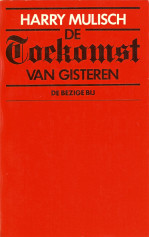
The Future of Yesterday (1972) by Harry Mulisch
A justification for an unwritten novel about Europe after 1945, following a German victory during the Second World War.
French
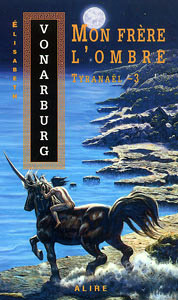
Mon frère l’ombre (Tyranaël 3) (1997) by Élisabeth Vonarburg
The third volume of Élisabeth Vonarburg’s grand saga: Tyranaël. The inhabitants of Virginia have had no contact with Earth for centuries. In the cities and villages of the main continent, a new order and an apparent peace prevail. Yet this in no way precludes the existence of ghettos where “Stoneheads”—descendants of the Earthlings who long ago attempted to reconquer the planet—struggle to survive. Mathieu, who believes himself to be one of them, has escaped from a “School” where he was held captive and drugged. Feigning amnesia, he manages to integrate himself into this Virginian society—a place where, he hopes, he will finally come to understand why he was treated in such a manner. His relentless quest leads him to take sides in the secret war that has pitted two factions of mutants—the “Greys” and the “Rebbims”—against one another for centuries, and, above all, to discover the bridge leading to the world of the Ancients…
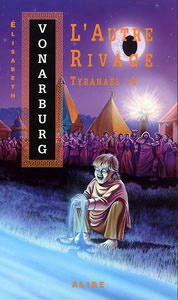
L’autre rivage (Tyranaël 4) (1997) by Élisabeth Vonarburg
The fourth volume in the *Tyranaël* series. The adventures continue… Since Mathieu crossed over into the world of the Ancients two centuries ago, many Virginians have followed in his footsteps. Yet while the two races have intermingled, their descendants—over the course of generations—have lost their psychic faculties. Such is the case with young Lian, much to his mother’s despair; for to a Rani, there is no greater tragedy than to be forever cut off from the Sea. For Lian, however, the true misfortune lies in feeling alienated from a society he cherishes above all else. Would he be better off on the other side—on Virginia? But until now, the passage has always been a one-way journey…
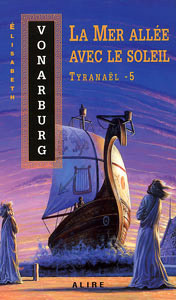
La Mer allée avec le soleil (Tyranaël 5) (1997) by Élisabeth Vonarburg
*The Sea Gone with the Sun*: the astonishing conclusion—and the resolution to every enigma—of a grandiose saga: that of Tyranaël. After centuries of conflict, peace finally reigns over Virginia, and—thanks to the Sea—communication is now possible with Atyrkelsaõ and the people of the Ancients. The granddaughter of a “Crosser” who arrived from the Other Side, Taïriel has nonetheless never manifested any powers and plans to go into exile aboard the Lagrange orbital station. However, a brief affair with Samuel—a young telepath with a mysterious past—will upend her plans for the future. Who is he, really? What connection exists between him and Ktulhudar, the legendary demigod of the Ancients? And why does Taïriel suddenly begin experiencing these “absences”—these “waking dreams” that leave her drained of strength and horrified by the violence of the visions?
Hebrew
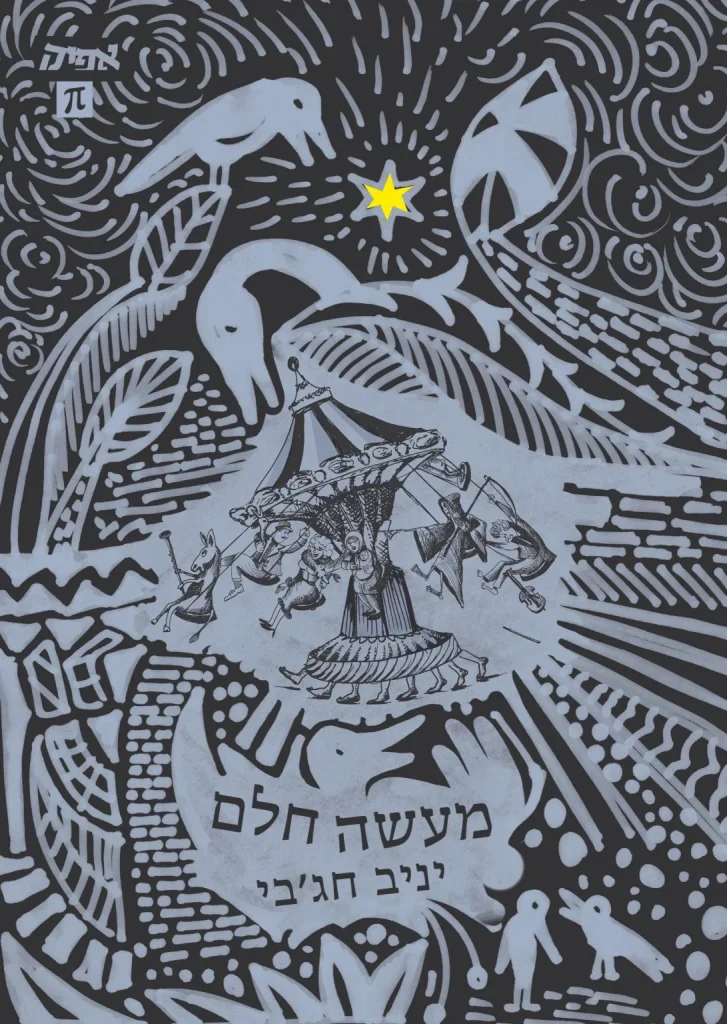
Chelm – A Tale of One City (2023) by Yaniv Hagbi
Chelm. We see only its broad back, unable to discern where its gaze is directed. Chelm is a city unlike all others, for beyond it lies nothing: it physically separates us from the void. Chelm is known in Jewish folklore as a city of fools. But the truth of Chelm is much darker—its inhabitants harbor an ancient and fearsome metaphysical wisdom beneath a facade of folly. If we dare to look directly at this wisdom, we risk being blinded. Yaniv Hagbi’s novel weaves the stories of Chelm into a dizzying plot. It focuses on the tale of the son of the Chelm blacksmith, who seeks to save his soul from the city’s grotesque logic. He is exiled to the neighboring city of Z, where logic and practical reasoning prevail. But the city of Z cannot endure life alongside the spiraling spectacle of folly for long, and the blacksmith’s son is forced to return to Chelm one last time— this time as the leader of Z’s inhabitants, to fight against his birthplace and destroy it.
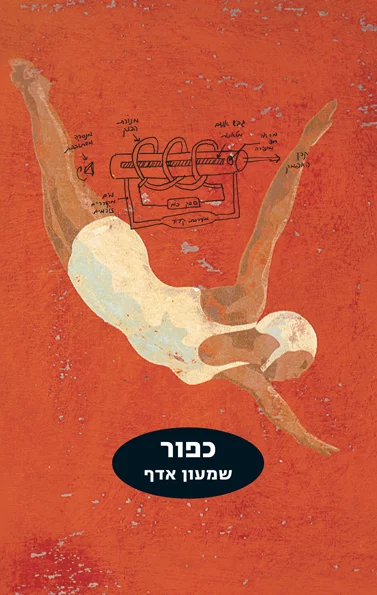
Frost (Rose of Judea #1) (2010) by Shimon Adaf (Kinneret, Zmora-Bitan)
In five hundred years’ time, in Tel Aviv, a number of Jewish religious seminary students begin showing signs of mysterious body changes. A genius in Torah and science, Yehezkel Ben Grim is rushed to the scene, asked to diagnose the strange disease and find a cure. In his search for a remedy, he travels to the lands of the Gentiles, and when he returns to Tel Aviv he is followed by a young Gentile woman who clings to him like a shadow. Meanwhile, the works of an anonymous poet are heard in the city and he is denounced as a rebel, for poetry is forbidden to those who have not been ordained as poets. The investigation into the poet’s identity and the arrival of the Gentile woman in Tel Aviv undermine the stability of the city and seal the fate of many characters in the story.
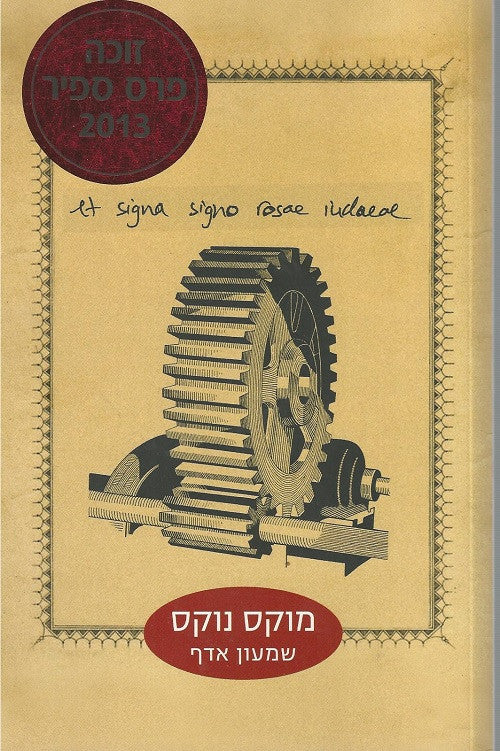
Mox Nox (Rose of Judea #2) by Shimon Adaf
In this novel, Adaf deals with major issues in contemporary Israeli experience: secularism and religion, outlying areas versus the center of the country, authenticity and puritanism versus the phony and debauched. And as always with Shimon Adaf, the fantastic permeates reality and undermines it.
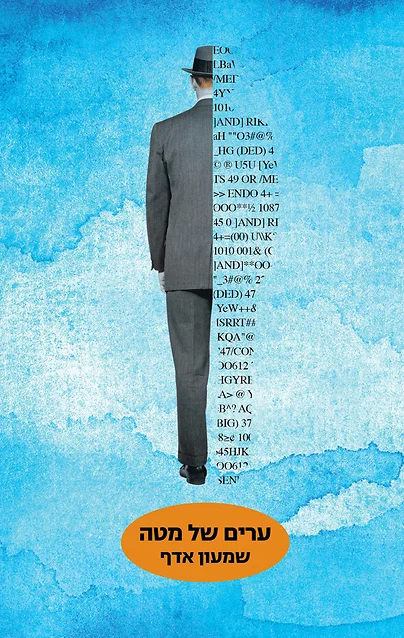
About the Undercities (Rose of Judea #3) by Shimon Adaf
During a stay in Berlin, a young Israeli – the narrator – sees a symbol that makes him feel anxious and he decides to look into its history. At the same time, we meet a brother and sister, Tveria and Akko Asido, whose childhood and adolescence are marked by their father’s attraction to an unknown, occult Jewish belief. Between the narrator’s story and that of the two siblings, the reader is led to make certain connections, leading to possible answers, but they are not accessible to the characters. This is a mesmerizing novel about a passion to understand the world, and about the distortions that are bound up with that passion. Like all great tragedies, it grows out of the most important questions: Are we doomed to take on an identity that has come down to us through family heredity, even though it is clear to us that certain aspects are flawed or coincidental? Or should we try to develop an identity based on an alternative system offered to us by human culture?
Korean
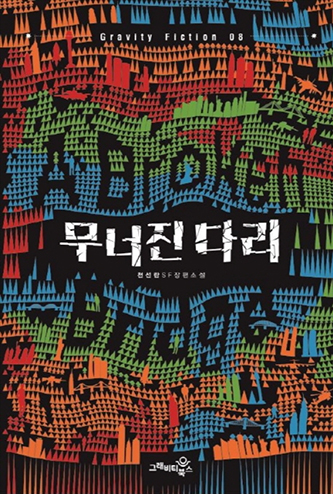
A Broken Bridge (2019) by Cheon Seon-Ran
A nuclear rocket falls onto the US continent, eventually making it unlivable for any beings. Androids are sent to cleanse the contaminated area, and there they make their independent advancement. The main character, “Ain,” was a former astronomer who lost his body to an accident and put his brain into an android. Won the excellence prize for full-length novels at the 7th SF Awards 2020.
Hungarian SF

Italian SF [click here for more]


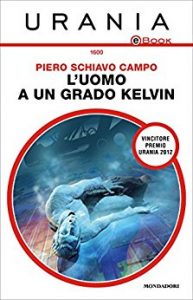

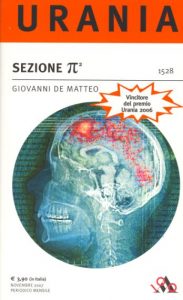
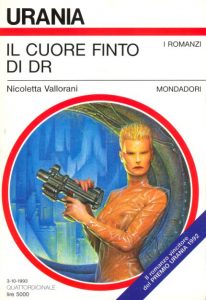
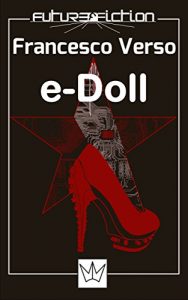
Spanish SF
Bulgarian
Worm in an Autumn Wind by Valentin Ivanov
Fantastika 2009, ed. Atanas P. Slavov and Lakin Nenov
The Kindness Factor by Kancho Kozhuharov
Chinese
My Homeland Does Not Dream by Han Song
2066: Red Star Over America (2000) by Han Song
Red Ocean (2004) by Han Song
Subway (2010) by Han Song
Cheng Jingbo
Crane Iron Pentalogy by Wang Dulu (1938 to 1942)
Czech
Express Train 24.12 by Jan Poláček
The Masters of the Universe, ed, Ivan Adamovic
Labyrinth by Pavel Rensin
Black Frost by Stepan Kopriva
Capricorn 70 anthology, edited by Robert Pilch
Mycelium by Vilma Kadlečková
Last Watch by Tomáš Petrášek
Konstantyn’s Effect by Karolina Francová
Puzzle by Chaim Cigan
The Listener by Petra Stehlíková
Atschul’s Method by Karol Efraim Sidon
Danish
Mount Copenhagen by Kaspar Colling Nielsen
Marskens Konge by Alex Uth
De underjordiske by Thomas Stromsholt
Drommetid by Richard Ipsen
Diget by Teddy Vork
Finnish
En tunne sinua vierelläni (I don’t feel you beside me) (Teos, 2010) by Tiina Raevaara
The Explorer and Other Stories (1999) by Jyrki Vainonen
Pimeä maa (Out of the Land of Darkness) (1995) by Maarit Verronen
Bright and Clear by Maarit Verronen
Dream Releaser Florian by Jani Saxell
Flemish
The Straggler by Yves Petry
French
Plaguers by Jeanne A. Debats
Druid by Olivier Peru
Forets Noires by Roman Verger
Rosee de feu by Xavier Maumejean
Janua Vera by Jean-Philippe Jaworski
Gagner la guerre by Jean-Philippe Jaworski
Sacra 1 and 2 by Léa Silhol
Latium by Romain Lucazeau
Les Nefs de Pangée by Christian Chavassieu
Dans les veines by Morgane Caussarieu
Je suis ton ombre by Morgane Caussarieu
Rivage des intouchables by Francis Berthelot
La saga d’Illyge by Sylvie Bérard
Rêves de Gloire by Roland C. Wagner’s
Le Goût de l’immortalité by Catherine Dufour
La Horde du Contrevent by Alain Damasio
Le Rituel du mépris by Antoine Volodine
Laurent Genefort’s Omale books
Ayerdhal and Jean-Claude Dunyach’s Étoiles mourantes
Suprématie by Laurent McAllister
L’homme a rebours by Philippe Curval
Le ressac de l’espace by Philippe Curval
German
Schatten über Fraterna by Andreas Hesse
Schaumschwester by Thor Kunkel
Hinterland, ed. Karla Schmidt
Ende der Nacht by Ralph Doege
Hebrew
Vered Tochterman
Sequoia Children by Gon Ben-Ari
Mesopotamia—Silence of the Stars by Yehuda Israely and Dor Raveh
Herzl Said by Yoav Avni
Demons in Agripas Street by Hagay Dagan
Every Story Is a Sudden Cat by Gabriela Avigur-Rotem
Broken Skies by Keren Landsman
Tzong Li’s Fifth by Yoav Avni
Hydromania by Asaf Givron
Eshtonot (The Book of Disorder) by Ofir Touché Gafla
Etsba’ot shel pesantran (Piano Fingers) by Yali Sobol
Alma by Roni Eshkol
Kesheha-meitim hazru (When the Dead Returned) by Ilan Sheinfeld
Japanese
Moribito novels (3-10) by Nahoko Uehashi
Unbroken Arrow (final book in Yukikaze trilogy) by
more from Noriko Ogiwara’s Magatama trilogy
治療塔 by Ōe Kenzaburō
Korean
The Big Wolf Blue by Yun I-Hyeong
Love Replica by Yun I-Hyeong
Maori
The Chronicles of Rehua by Katerina Te Heikoko Mataira
Norwegian
Terms of Life by Ingeborg Arvola
Polish
Uprawa roślin południowych metodą Miczurina (Growing Southern Plants the Michurin Way) by Weronika Murek (Wydawnictwo Czarne, 2015)
“Wody głębokie jak niebo” (Waters as deep as the sea) by Anna Brzezińska
Extensa by Jacek Dukaj
Inne Pieśni by Jacek Dukaj
Vertical by Rafał Kosik
Holocaust F by Cezary Zbierzchowski
Perfekcyjna niedoskonałość by Jacek Dukaj
Limes inferior by Janusz A. Zajdel
Portuguese
Cristina Lasaitis
Liquid Paradise by Luiz Bras
Guerra Justa by Carlos Orsi
Cyber Brasiliana by Richard Diegues
Varadero y Habana maravillosa by Hernán Vanoli (Caballo de Troya, 2011)
—- Pinamar (Interzona, 2010)
—- Castores (Random, 2013)
La Construccion by Carlos Godoy
Kryptonita by Leonardo Oyola
Plop by Rafael Pinedo
El loro que podía adivinar el futuro by Luciano Lamberti (Nudista, 2012)
Fade Out by Tatiana Goransky
El jardin de las maquinas parlantes by Laiseca
Romanian
Marian Coman
Michael Haulica
Russian
Wolfhound by Maria Semyonova
Spanish (Chile)
Elena Aldunate
“Juana y la cibernética” [Juana and the Cybernetic] (1963)
El señor de las mariposas [The Lord of the Butterflies] (1967)
Angélica y el delfín [Angélica and the Dolphin] (1976)
Del cosmos las quieren vírgenes [The Cosmos Wants Them to Be Virgins] (1977).
Spanish (Cuba)
Daína Chaviano
Los mundos que amo [The Worlds that I Love] (1979)
El abrevadero de los dinosaurios [Dinosaur Trough] (1980)
Amoroso planeta [Loving Planet] (1983)
Historias de hadas para adultos [Fairytales for Adults] (1986)
Fábulas de una abuela extraterrestre [Fables from an Alien Grandmother] (1989)
El hombre, la hembra, y el hambre [Man, Woman, and Hunger] (1998)
País de dragones [Country of Dragons] (2001)
Extraños testimonios [Strange testimonies] (2017)
Spanish (Spain)
Rafael Marin
Akasa-Puspa series
